
I used InterServer for a short period of time, but I wasn’t impressed by the platform or the support service. Eventually, I decided to migrate away and never looked back.
I want to share three of the best alternative web hosts that I’ve had a better experience with in 2026.
1. Shock Hosting
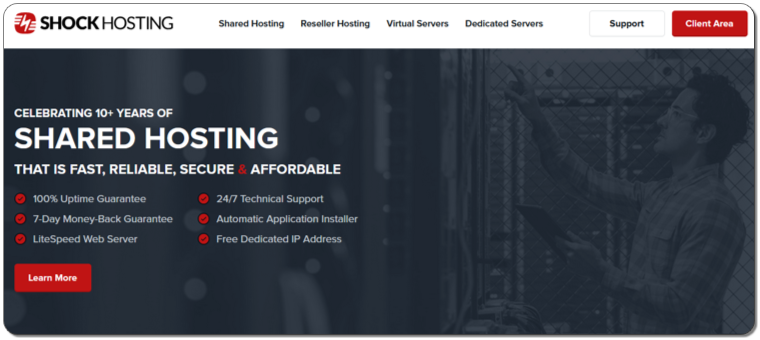
Shock Hosting was the first alternative I tried, mainly because I wanted something cheaper with cPanel. I used it for a small WordPress site.
I didn’t expect much for $3 per month, but it surprised me.
The support service is noticeably better than what I had with InterServer, and their servers seem to perform better. It didn’t feel overloaded, and for a simple website, it just works perfectly.
I also appreciated the straightforward pricing. Unlike InterServer, Shock Hosting doesn’t charge a higher price for renewal, so it’s a more affordable option long term.
That said, Shock Hosting feels like a niche solution. It’s great for low-traffic sites, personal blogs, or side projects, but I would be hesitant to use it for anything mission-critical. It lacks the ecosystem and scalability of bigger providers.
2. NameCheap
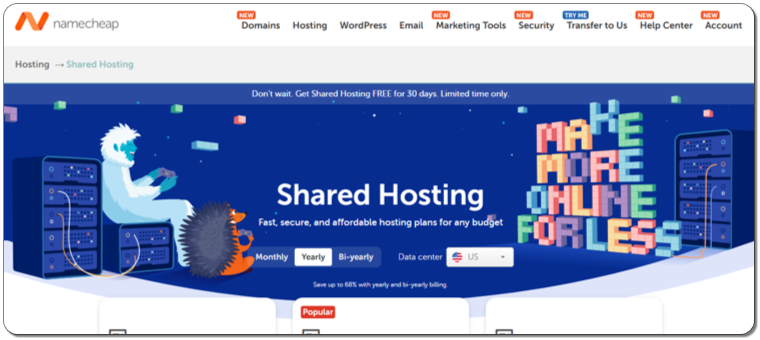
Next, I moved a couple of business websites to NameCheap.
This felt like a natural transition because I was already using NameCheap for domains. They use the cPanel control panel for their shared hosting, so the experience was very familiar and the transition went smoothly.
NameCheap has a lower renewal price for their shared hosting compared to InterServer, but there is one major disadvantage: they don’t have free Let’s Encrypt SSL certificates. Instead, they give you premium SSL certificates that are free for the first year, then you pay a yearly renewal fee for each certificate. It’s only about $13 per year, so it wasn’t a dealbreaker for me.
NameCheap, in my experience, is perfect for beginners or small sites. But once you scale, you start feeling the limits, especially compared to more performance-focused hosts.
3. Hostinger
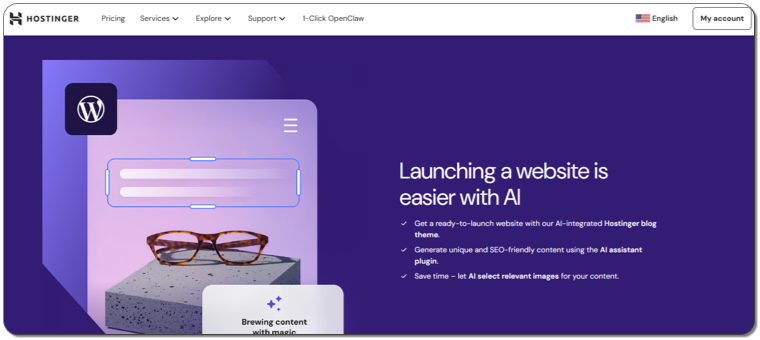
Moving to Hostinger was where things really changed.
From the moment I migrated my first site, the difference was obvious. The dashboard (hPanel) felt modern and well-organized, and everything was smoother.
Hostinger also scales better than InterServer. Whether it’s shared hosting, cloud, or VPS, there’s a clear upgrade path. It’s not perfect, but it’s the first host I used that felt like it was built for growth.
Hostinger offers discounted introductory prices like InterServer, but their renewal prices are a bit high. Not too high, but if you are on a tight budget, Shock Hosting might be a better option for you.
What I Learned After Migrating
Switching away from InterServer taught me something important: there’s no “perfect” host; only the right one for your current needs.
- Shock Hosting works best for small, budget projects.
- NameCheap is ideal for beginners or simple websites with moderate traffic.
- Hostinger is the best choice if you plan to scale.
InterServer still has its place, especially if you value predictable pricing and unlimited resources. But for me, the trade-offs, especially in support service, weren’t worth it anymore.
Leave a Reply